Drillguide GST helps connect Orkney to the Scottish mainland

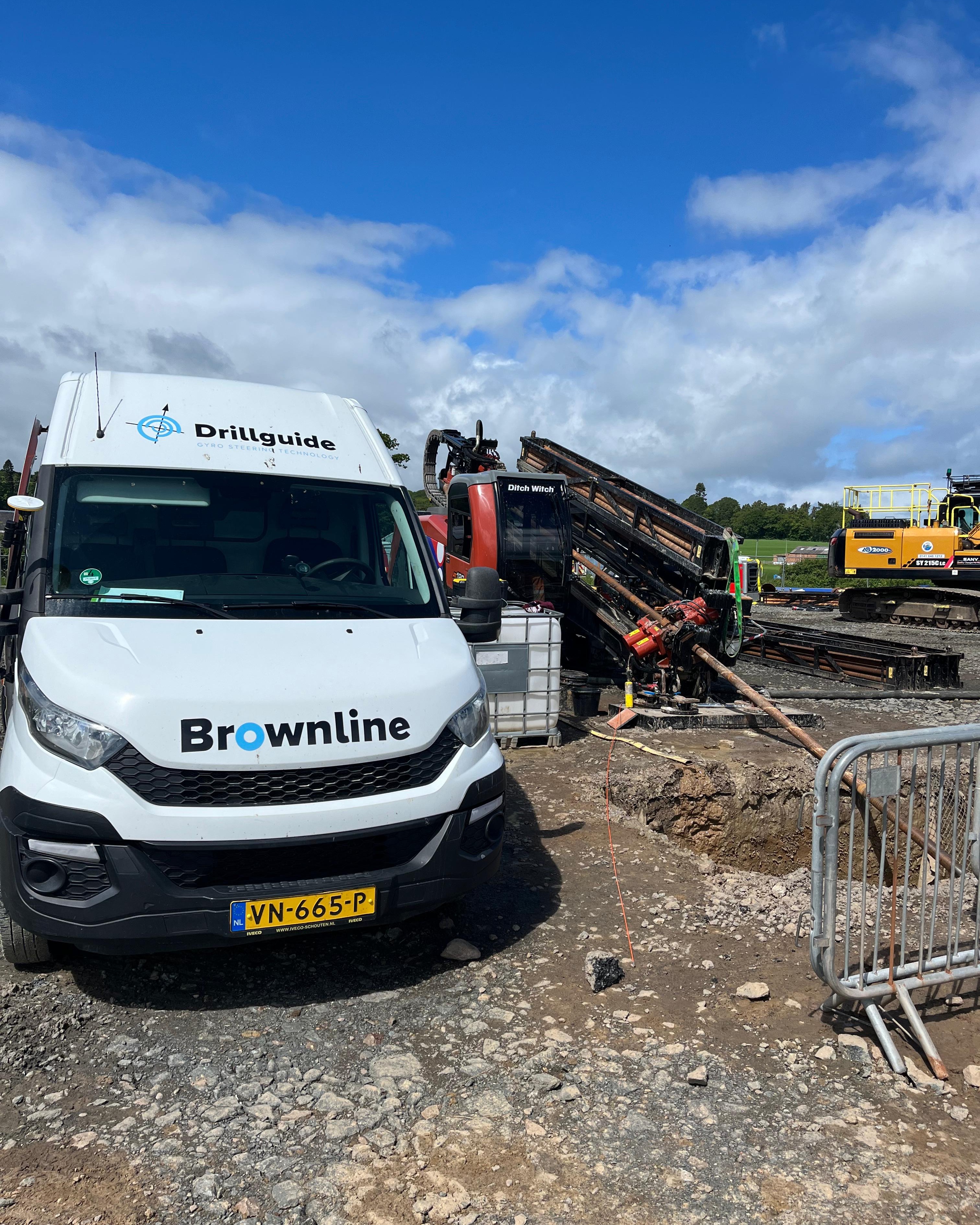
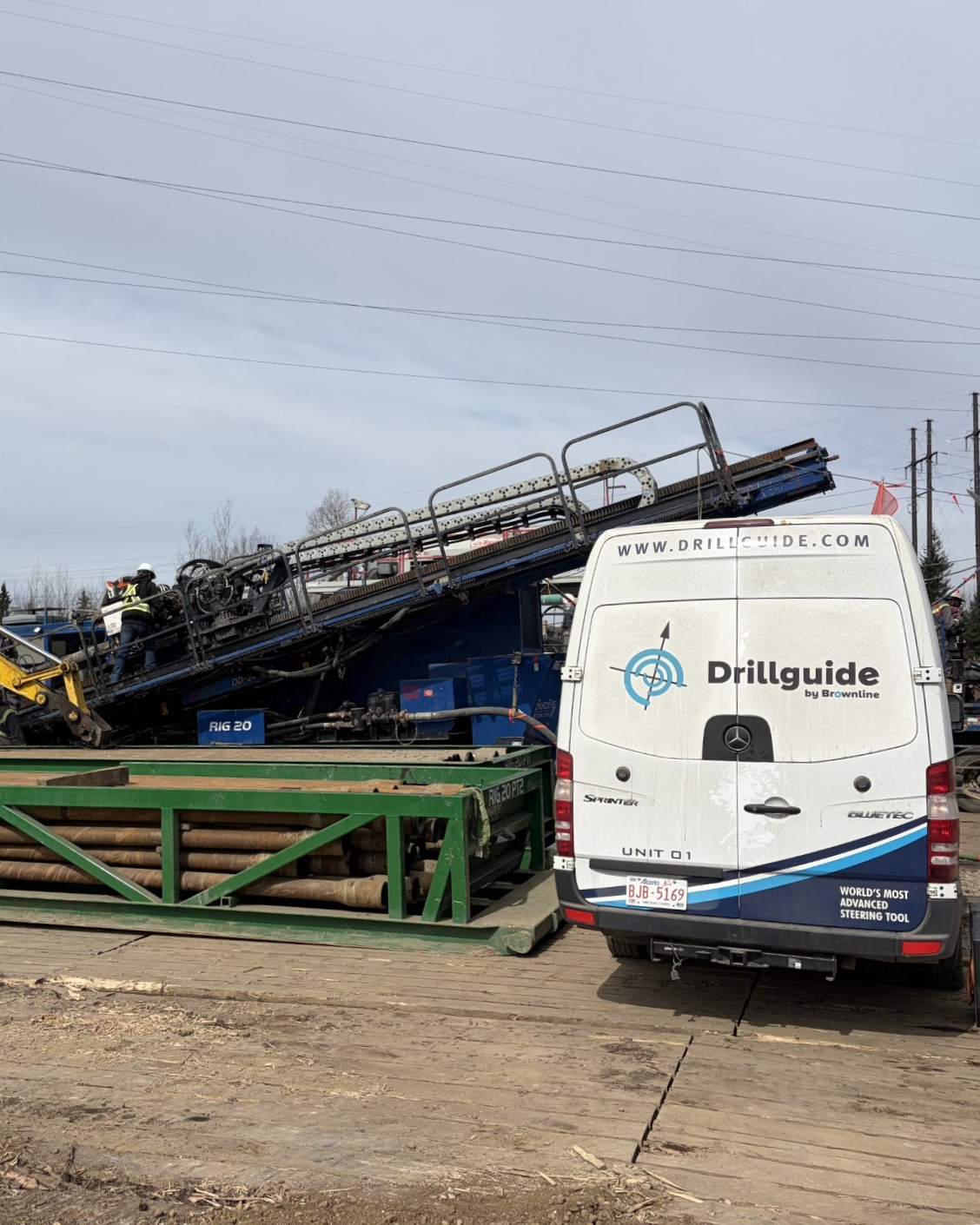
Between the spring of 2025 and the spring of 2026, Brownline has contributed to the successful completion of two pairs of HDD landfalls. The project took place on the Orkney Islands and on the northernmost tip of mainland Scotland. The Drillguide Gyro Steering Tool was the ideal solution to carry out the pilot bores for these critical landfall drills with the highest accuracy.
Project background
Large infrastructure improvements are being carried out to increase the transport capacity and the interconnectivity of the Scottish power grid. These improvements will help the United Kingdom to utilize renewable energy sources to their full capability. This will pave the way to achieving renewable energy targets set for 2030.
On the Orkney Islands, renewable energy generation is very well developed, including onshore wind farms as well as wave energy and tidal energy generation. Connecting the Orkney grid to the mainland grid will allow the generated energy to be transported efficiently to areas of high energy demand. The connection is not limited to transmission in one direction, so Orkney will also benefit from the mainland network.
To establish this connection, 53 km / 33 mi of subsea cable is to be constructed between Orkney and the mainland. To bring the cables ashore, trenchless specialist Peter McCormack & Sons Ltd. – an OCU Group company – carried out horizontal directional drills at both sites: Stromness on Orkney, and Dounreay on the north coast of the mainland. Brownline assisted in each of the four pilot bores, surveying them with the Drillguide Gyro Steering Tool.

Stromness: Accurate drilling with a picturesque backdrop
In 2025, Brownline travelled to Orkney to provide steering services for the first two pilot bores. These were 1191 m / 3907 ft in length and were located 10 m / 30 ft apart. While the farmhouses on the hills made for a pleasant view, the HDD operation was very challenging. The drill had to traverse extremely hard rock formations and fault zones, which caused difficult conditions.
The pilot drills were executed using a Drillguide Gyro Steering Tool behind the mud motor. The accuracy of the Drillguide GST is unmatched in the HDD industry. The real-time measurements and the guidance of Brownline’s expert surveyors on site allowed the driller to follow the planned curves with maximum precision.
Utilizing Brownline’s Pressure-While-Drilling service, the downhole pressures were constantly monitored. This helped with maintaining borehole stability and preventing drilling fluid breakouts as the drill passed under the sea.


Dounreay: Efficient operation on a concrete drill site, punching out using Drillguide Autopilot
Following the success of the parallel landfalls at Stromness, Brownline once again joined Peter McCormack & Sons Ltd. for the pilot drills at Dounreay in 2026. The contractor had chosen to construct the HDD site on the northern coast entirely out of concrete. This benefited the cleanliness of the site and thus the overall efficiency of the operation.
The two Dounreay landfalls had a length of 840 m / 2756 ft and reached a depth of 18 m / 59 ft below the seabed. Brownline again deployed the Drillguide Gyro Steering Tool including its Pressure-While-Drilling module to provide the HDD contractor with accurate real-time readings of the drill head position and downhole pressures. This resulted in precise and efficiently drilled landfalls once more.
The final 50 m / 160 ft of the pilot were left uncompleted at first. This allowed the contractor to fully ream the completed section first. Then the remaining section was drilled and punched out into the sea. For this final section, McCormack used Brownline’s latest steering innovation: Drillguide Autopilot.
This service involves a highly advanced yet user-friendly steering software that the driller can operate. As it does not require a surveyor on site, Drillguide Autopilot gives the contractor the flexibility and autonomy to start drilling whenever fits their schedule. The progress of the job is then monitored live by experts working remotely from Brownline’s head office. They can support and advise the driller where needed, which means there is no compromise on the precision and quality of the job.
This project was the first time that Drillguide Autopilot was used for this delayed punchout. This application was met with very positive reception by all parties involved.


Conclusion
Later this year and into 2027, the subsea cable will be installed to complete the connection between Orkney and the mainland.
This project exemplifies the need for accurate and reliable HDD solutions for the construction of critical high-profile energy infrastructure. Horizontal directional drilling is the ideal method for completing the start and end points of subsea cable connections. As more power grids are interconnected and more offshore energy projects are connected to the mainland, these landfall HDDs will continue to play an important role in the future of energy infrastructure.
Relying on the most advanced HDD steering solutions available means these crucial projects are completed accurately and efficiently. Brownline is proud of how its innovation and expertise has contributed to this exceptional infrastructure project.